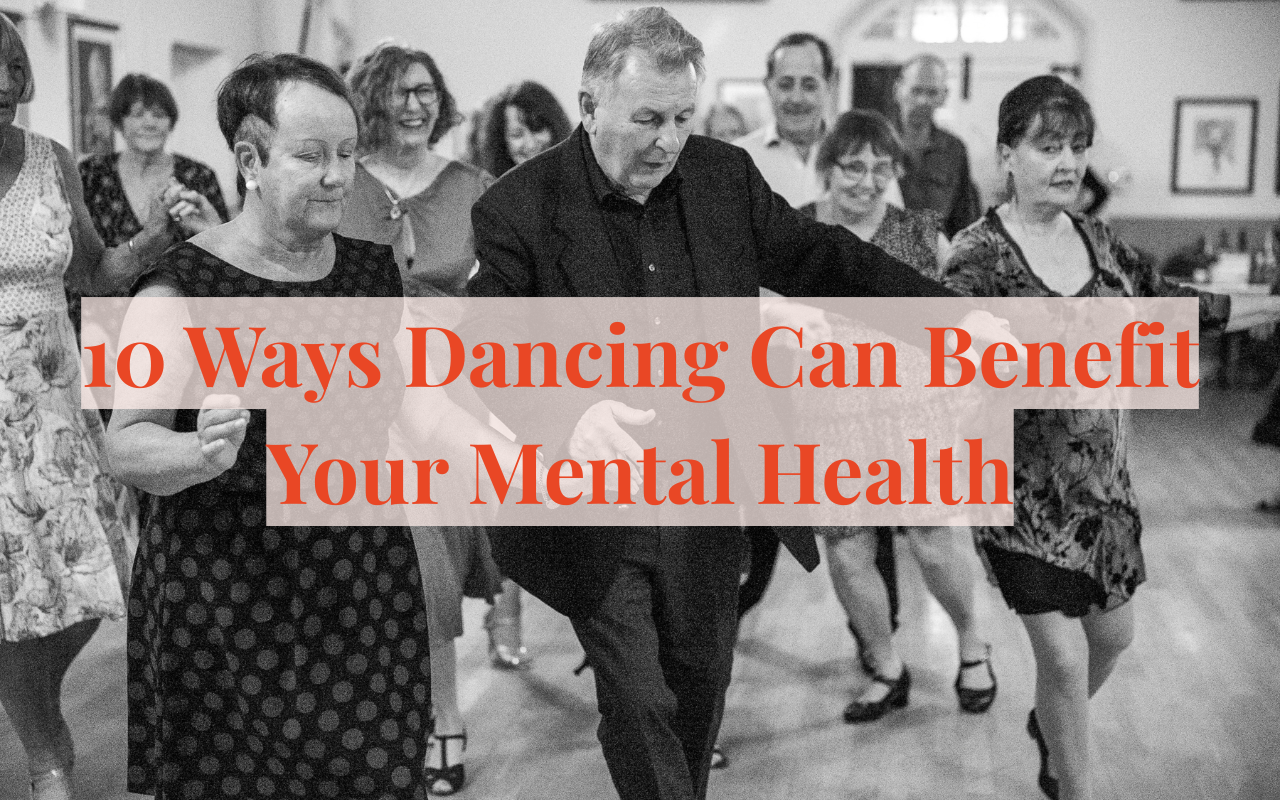
Dancing is often thought of as a way to keep fit, have fun and meet people – but its benefits can go well beyond the physical.
Whether you're taking part in a weekly class, dancing socially with friends or simply putting on your favourite song at home, dance combines movement, music, creativity and connection in a way that can support mental wellbeing.
Research into dance interventions has found reductions in symptoms of depression, anxiety and stress, although the strength of evidence varies between studies. A 2021 review of 28 randomised controlled trials involving more than 2,200 adults found significant effects on depression symptoms, anxiety and stress, while a later systematic review found that structured dance can provide psychological benefits comparable with other forms of physical activity.
So, what is it about dancing that can make us feel good?
1. It can lift your mood
One of the simplest benefits of getting moving is that it can help improve how you feel. Physical activity stimulates the release of chemicals associated with positive mood, and research specifically looking at dance has found improvements in mood and reductions in depressive symptoms. (Source: Mental Health Foundation)
Sometimes, putting on a favourite song and moving to it can be enough to provide a welcome change of mood.
2. It can help reduce stress
Life can be busy, and finding time to switch off isn't always easy. Dancing gives you something immediate to concentrate on: the music, the movement, the rhythm or the steps – providing an opportunity to take your attention away from everyday pressures.
Research into physical activity more generally shows that it can reduce stress and tension, while reviews of dance interventions have also found reductions in stress among participants.
3. It can ease feelings of anxiety
Dance isn't a treatment for anxiety, but physical activity can help reduce anxiety symptoms and provide a way of managing stress. A review of 28 randomised controlled trials found a significant reduction in anxiety among adults taking part in dance interventions, although the researchers rated the overall quality of evidence as low.
The combination of movement, music and concentration can also give you something positive to focus on in the moment.
4. It can boost confidence
Learning something new can be challenging, but successfully mastering a step, sequence or routine can provide a genuine sense of achievement. Over time, seeing yourself improve can help build confidence, whether you're learning your first dance steps or working towards performing in front of an audience.
Recent research has also found evidence that dance can improve physical self-esteem and self-confidence.
5. It gets you out of your head and into your body
We spend a lot of time thinking, worrying, planning and looking at screens .Dance offers an opportunity to focus on your body instead. You might be concentrating on your feet, following the rhythm, responding to a partner or remembering a sequence.
That change of focus can provide a useful mental break from whatever else is going on.
6. It brings people together
For many people, one of the best things about dance is the people. Classes and social dance events can provide opportunities to meet others, make friends and become part of a community. Research into dance and psychological wellbeing has highlighted the potential importance of social interaction and connection, particularly in group and partner dancing.
And you don't necessarily have to arrive knowing anyone. A dance class can be a reason to get out of the house and connect with people who share an interest.
7. It gives you something to look forward to
Having a regular dance class or social event in your diary can create structure and anticipation during the week. It might be an hour of salsa on a Tuesday evening, a weekend ballroom session or a social dance with friends;' having something enjoyable planned can give you a sense of purpose and something positive to look forward to.
The Mental Health Foundation notes that finding physical activity you enjoy can provide a goal, a sense of purpose and opportunities to meet people.
8. It encourages creativity
Dance isn't just about exercise. It's also a form of creative expression. Whether you're improvising to music, learning choreography, creating your own movements or simply finding your own way of interpreting a song, dance gives you an opportunity to be creative.
That can make physical activity feel less like a chore and more like something you genuinely want to do.
9. It can give you a sense of achievement
There is something particularly satisfying about learning a movement that once seemed impossible. Perhaps you've finally mastered a turn, remembered an entire routine or found the confidence to dance in front of other people.
Those small achievements can add up, providing a sense of progress and accomplishment. And you don't have to be aiming for a performance. Simply turning up to class and learning something new can be an achievement in itself.
10. It can simply make you happy
Perhaps the biggest benefit is also the simplest: dancing can be fun. Music you love, movement that feels good, people you enjoy spending time with and the satisfaction of learning something new can all contribute to a positive experience.
And finding an activity you genuinely enjoy matters. Physical activity doesn't have to mean going to the gym, running or following a particular fitness routine. As the Mental Health Foundation points out, choosing an activity you enjoy can help make it easier to incorporate movement into everyday life.
Find your groove
There isn't one right way to dance, and you don't need to be an experienced dancer to enjoy the benefits.
From ballroom and ballet to salsa, street dance, contemporary, tap, swing, line dancing and everything in between, Jersey has a huge range of opportunities to get moving.
And if joining a class feels like too much of a step, start small. Put on a song you love and dance around the kitchen. You never know where one song might take you.
Please remember that dancing and physical activity are not a substitute for professional mental health support. If you're struggling with your mental health, speak to your GP or an appropriate healthcare professional.